Teddy Bear Vintage Watercolor Clipart: A Designer's Guide
Understanding the Aesthetic of This Clipart Set
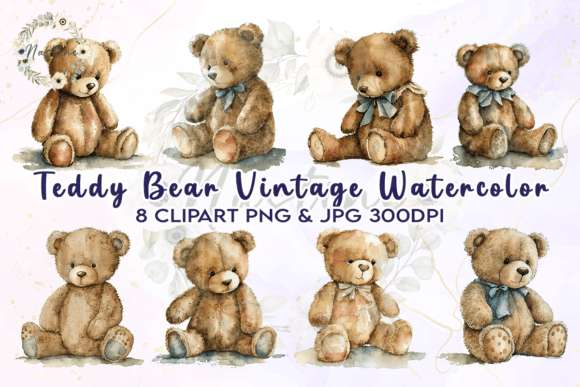
The Teddy Bear Vintage Watercolor Clipart set offers a distinct visual character that blends nostalgic charm with artistic softness. The primary appeal lies in the watercolor texture, which creates an organic, hand-painted look that digital graphics often lack. Each bear illustration features soft color bleeds, visible brushstroke textures, and a muted, vintage-inspired palette. This style avoids the harsh lines of flat vector art, providing a warmer, more personal feel. The personality of these illustrations is inherently gentle, comforting, and classic, making them versatile for projects targeting audiences who appreciate craftsmanship and sentimentality.
From a technical standpoint, these are not vector files but high-resolution raster images. You receive PNG and JPG files sized at 4000×4000 pixels at 300 DPI. This specification is critical for print quality, ensuring the artwork remains sharp and detailed for physical products. The transparent background on the PNG files is a significant functional advantage, allowing you to layer the bears seamlessly over patterns, photographs, or solid colors without the hassle of manual clipping paths. It’s a practical design asset that saves considerable time in production.
Practical Applications: Where This Style Excels
The true value of the Teddy Bear Vintage Watercolor Clipart is realized in its application. This style is particularly effective in editorial design and packaging design where a tactile, artisanal quality is desired. Imagine these bears on the cover of a children's storybook, a boutique bakery's branding, or the label for a handmade soap. The watercolor effect communicates authenticity and care, which can positively influence brand perception. For entrepreneurs and small business owners, using such a distinctive visual can help build brand recognition in a crowded market.
For digital creators, the applications are equally broad. The clipart is perfect for creating engaging social media graphics, website banners, and digital product mockups. The vintage aesthetic works wonderfully for seasonal campaigns, baby shower invitations, or nursery wall art prints. When used in web design, these illustrations can soften a layout and add a focal point without overwhelming text content, aiding in visual hierarchy. For crafters, the files are ready for sublimation printing on mugs, t-shirts, and tote bags, provided the correct equipment and color settings are used.
Integrating with Typography and Layout
When pairing this clipart with typefaces, consider fonts that complement its handmade quality. A clean sans serif font can provide excellent contrast and readability for body text, allowing the illustrated bears to stand out. Alternatively, a script font or handwritten font can echo the artistic style for headlines, creating a cohesive, whimsical look. However, prioritize readability considerations—avoid overly ornate scripts for small text. The goal is to use typography to support the visual story, not compete with it. Test different font pairing options to see what best suits your project's tone.
For logo design, a single bear element could become a memorable icon, especially for brands in the childcare, gift, or confectionery industries. The illustration's detail ensures it scales well within a logo mark. In editorial design, such as magazines or newsletters, these bears can serve as charming spot illustrations or section dividers, breaking up long text passages and adding visual interest. The key is to use them intentionally as part of a larger design system, ensuring they align with your project's color scheme and overall message.
Technical Considerations for Optimal Results
Before purchasing, ensure your workflow can accommodate these files. The 300 DPI PNG files in RGB color mode are standard for digital printing, but color appearance can shift between screens and printers. It's wise to do a small test print if color accuracy is critical for your commercial font or design project. Remember, for sublimation, you need a sublimation printer and heat press; standard inkjet or laser printers will not achieve the same results. Understanding your software's capabilities is part of being a prepared designer.
The licensing is straightforward for digital download use. The absence of a watermark on your final files means you can incorporate them directly into your designs. Whether you're creating digital planners, printable wall art, or merchandise, the clipart provides a premium font-like quality in visual form. It's a creative font alternative for projects where illustration, not typography, is the star. By evaluating the file specifications and your project's needs upfront, you can confidently integrate this charming asset into your creative toolkit.